
There is something more than meets the eye over the needless harassment of a Indian diplomat in New York, says Seema Guha

Noted Scottish-born travel writer Bill Aitken, known for his writings on Indian mountains, rivers, and railways, died in Dehradun at the age of 90. Aitken, who arrived in India in the late 1950s, traveled extensively throughout the country, especially in and around the Himalayan ashrams of Kausani and Mirtola. He lived between Delhi and Mussoorie since the 1970s. In over two dozen travel books, Aitken explored India's religious and natural landscapes, wrote intimately about its people and their beliefs, and had a keen interest in Indian railways. Some of his noted works include "Seven Sacred Rivers," "Divining the Deccan - A Motorbike to the Heart of India," "Footloose in the Himalaya," and "Exploring Indian Railways."

Bill Aitken came to India nearly 60 years ago. He never returned. An Indian citizen since 1972, he tells Rediff.com's Archana Masih how India changed his life forever.
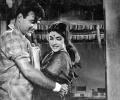
'Earlier, the comedy track used to run parallel to the main story with songs et al.' 'Nowadays, it's just once one scene here and there.'

The Supreme Court on Friday extended by two weeks the protection from coercive action it has granted to four members of the Editors Guild of India (EGI) in connection with two first information reports (FIRs) lodged against them in Manipur for allegedly promoting enmity between different groups.

The Supreme Court on Wednesday protected four members of the Editors Guild of India against any coercive action till Monday in connection with two FIRs lodged against them in the state for offences, including promoting enmity between two communities.

Manipur Chief Minister N Biren Singh on Monday said that a police case has been filed on the basis of a complaint against the president and three members of the Editors Guild of India (EGI) for a report critiquing media coverage out of Manipur, and accused them of trying to "provoke clashes" in the state.

The Supreme Court on Monday extended till September 15 its order asking the Manipur police not to take any coercive steps against four members of the Editors Guild of India (EGI) in connection with two FIRs lodged against them for alleged offences, including promoting enmity between two communities.

'Mr Akbar has underestimated the level of pent-up anger and commitment among these women,' a young lawyer tells Sunil Sethi.

'His essential doctrine was only the local police can fight terror.' '"You can't fire at mobs throwing stones," he said, adding one has to think innovatively, even defensively, sometimes.' Shekhar Gupta remembers the uncoventional SuperCop.

'I was told to go to the next room and strip -- that's when it really hits you for the first time... that you are a criminal and you are being treated like one.' 'It comes as a shock when, instead of your name, you hear, "Yeh naya Maowadi aaya hai (A new Maoist has arrived)".'

Prepping for Sanjay Leela Bhansali's Padmavati, remembering Rajesh Khanna and Raaj Kumar's exclusive tramp club and picking Ranbir Kapoor's best performance in my Super Filmi Week.

Each of the defendants was associated with the Micropower Career Institute, a for-profit school with five campuses in New York and New Jersey, or the Institute for Health Education, a for-profit school located in New Jersey. Suman Guha Mozumder reports.

MUST READ: The speech Nayantara Sahgal was not allowed to give.

'Never lose your optimism. Never lose your aspiration and never -- even if India becomes a prosperous consumer society -- never ever lose that shining light in your eyes,' advises Dr Peter McLaughlin, headmaster of the Doon School.
